Friday, March 3, 2017

Caught Up in the Bee House

I’ve neglected journaling this winter because I’ve been preoccupied with completing renovation of the Bee House. At first we called it casita B, but its name changed when Grant set to work on the renovation. He discovered a huge beehive in the chimney. A local beekeeper was happy to remove the hive (for a fee, of course) because the bees would bring new vigor to his apiary.


The building was in very bad shape. It had been rented as a studio apartment with a tiny kitchen and disgusting bathroom. The concrete floor was covered with vinyl tile that was laid at a goofy angle. Two brick planters abutted the front of the house, causing water retention that rotted the siding. Grant stripped it to the studs inside and out and removed the planters.

Originally this structure was a ramada, a roof supported by large beams. It’s easy to spot them in this photo.


He reframed the building to allow placement of a French entry door and two windows on the north side. He also removed the old entrance door, which was strangely placed at one end of the structure. Then he and Dennis put up new siding.


Next, they painted the siding.


This photo shows how neatly they had cut the new siding to fit the old ramada posts.


By the time we arrived back in Tucson last fall, Grant had new wiring and light fixtures installed, as well as a mini-split for heating and cooling. He had chipped up the old floor tiles. He framed in the tiny bathroom, and installed a new outside door that leads directly to the back door of Casita A. He also had put up insulation and sheetrock, and sanded and stained the inside of the ramada posts. He and Blair painted the walls on a 114º day.


Not much work remained to be done, but planning a tiny bathroom that would meet ADA specifications was a tremendous challenge for me. I was also constrained by placement of the original plumbing and by our budget. I spent weeks searching the Internet for products, scouring the offerings of local building supply stores, and even asking a local cabinetmaker to come up with a plan. (His ideas were well beyond our budget.) This photo shows the width of the space. I took it while standing in the doorway.


Eventually we settled on a 36”x”36” shower pan with porcelain tile walls.


In order to get wheelchair clearance to the toilet I chose a corner vanity, which Home Depot built to order, including seven coats of hand-rubbed paint. A piece of marble left over from a big house renovation would become the vanity top.


Julio Mareno and his skillful crew did all the work in the bathroom, including these nifty shelves. They constitute the only storage space in the building.


We contracted with Rogo’s to refinish, stain, and seal the concrete floor and the concrete fireplace mantle and hearth. In this photo they had sanded off the old tile mastic, repaired chips, and added a layer of concrete to smooth the surface.
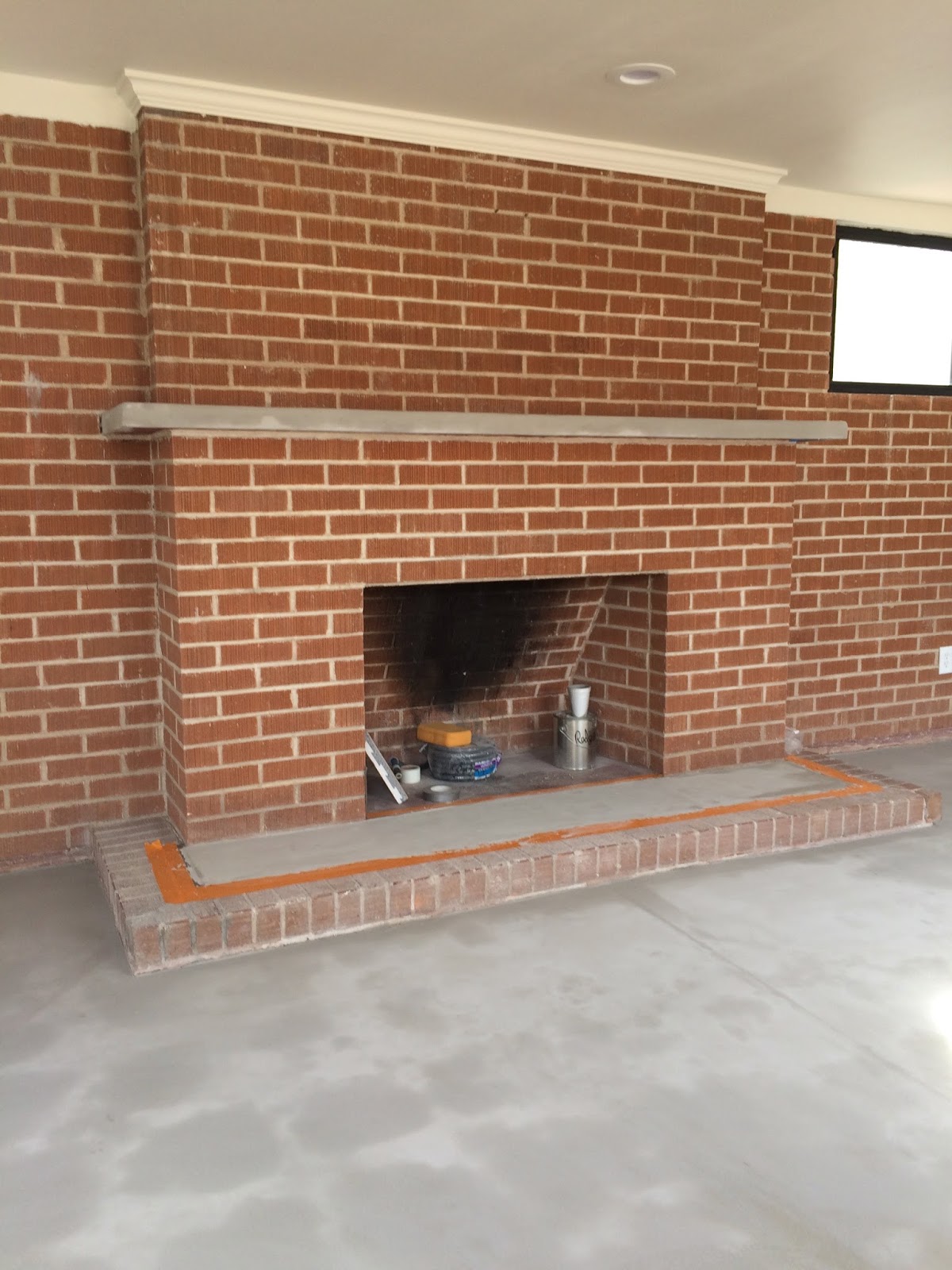

After that, they added two layers of stain and a protective resin finish. The results please us.


The bathroom looks great and is highly functional.


Finally, Grant and Dennis cut and installed the baseboards all around. Grant and Blair contributed window shades for privacy. We moved in our newly-cleaned carpets and used furniture from two of Tucson’s many nice used furniture stores. Shortly afterward the sofa bed was occupied by visiting grandchildren.


Ta-dah! Now, back to normal life.


Copyright 2017 by Shirley Domer

Sunday, February 19, 2017

Wrong Side Out

When I was a student at William Chrisman High School I sometimes hung around on the edges of a crowd of popular girls. They were catty and smug, but I found them interesting and attractive in an oblique way. One member of the group became known for openly peeking at the label inside the necks of other girls’ sweaters. This was seen as an affront, and as a rebuke the other girls started wearing their sweaters inside out. Everyone in the hallways noticed. The message got through and the girls went back to wearing their sweaters right side out.

Several years ago I owned a green, gauzy skirt. It was made with overcast seams on the outside, not the customary way of hiding seams inside the skirt. Each time I wore it someone would ask, “Isn’t your skirt on wrong side out?” Usually the questioner was my dear husband. But I liked it and kept wearing it.

The point is, of course, that we expect one to wear clothing with seams hidden from sight. Wearing clothing with outside seams is a sure way to get attention. Isn’t it strange that we have certain unspoken customs such as clothing must be worn “right” side out? The high school clique members knew that they were violating a social norm. They purposefully violated it to send a pointed message. I chose my green skirt because I liked the fabric as well as the design with its delineated seams.

Outside seams ­– even unfinished seams – have become more common during the ensuing years, thank goodness. Our society has loosened up in many ways, but we still have a long way to go toward respecting others’ personal preferences.

On a lighter subject, I want to write about something sweet – sugar pies.


Sugar pies are made from pastry scraps from making a pie. Scraps from trimming the crust from pie pan edges are laid aside and rolled together. Do not wad the trimmings into a ball, but lay them side-by-side before rolling them. The shape will be irregular, but that doesn’t matter. The important part is that a flaky, tender crust must be handled as little as possible.

Lay the sheet of dough in a baking pan and sprinkle it with sugar and cinnamon. Use a pastry cutter or a table knife to cut the dough into squares or triangles or leave the sheet whole.

When the main pie is done, lower the oven temperature to 375º and bake the sugar pies for about 12 minutes. Watch for them to disappear as soon as they’ve cooled a bit.


Copyright 2016 by Shirley Domer

Wednesday, February 8, 2017

Compassion

Back in the day when our flock of chickens in Kansas included a rooster we had a hen who went broody and sat on a clutch of nine eggs. In due time the chicks hacked their way out of their shells. Eight chicks were perfect, but the ninth seemed to be malformed. On the second day when I visited the nest I found the malformed chick lying on the concrete floor instead of in the nest with its siblings.

I gently picked up the chick, which was quite alive, and put it back in the nest under the mother hen’s wing. Later, when I went back to gather eggs, I found the chick on the floor again and again I placed it back in the nest. Immediately the hen used her beak to shove the chick out onto the floor. I put it back in the nest once more, but the next morning the chick was dead on the floor. Clearly the hen recognized the chick’s deformity and refused to care for it.

The Hawaiians used to do something like that. (James Mitchener wrote about it in his novel Hawaii.) A baby that was born with defects was placed on a mountainside to die. Even so small a defect as a red birthmark was a baby's doom.

Now, of course, we are horrified by the thought of abandoning a newborn human, of leaving it to die. We go to extraordinary lengths to preserve life, spending millions of dollars to keep a defective baby alive.

We are compassionate people. President George W. Bush pushed for a federal law called “No Child Left Behind.” The law required that public schools must accept disabled children, no matter how severe their damage. It also required that every child in every grade must regularly take standardized tests to assess their progress.

My daughter teaches fourth grade in a Colorado public school. She has several learning disabled children in her class each year, along with average and gifted students. This year one student is in a wheelchair and is accompanied all day by a nurse. The child is unable to move or talk and must be fed through a feeding tube. Not only is she incapable of learning anything, she also disrupts the entire classroom by screaming and shrieking throughout the day. This is compassion run amok, I believe.

Draw your own conclusions from these ramblings about chicken behavior and public school policy. And, if you will, help me find the rational middle.


Copyright 2016 by Shirley Domer

Friday, February 3, 2017

Loving Intergenerational Living

I love intergenerational living. We share a property with our grandson and daughter-in-law. They live in the big house. We live in the guesthouse, known here as a casita.

We share our evening meals. Dennis and I cook mostly on weekdays when they are at their lawyer jobs. They cook on weekends and often a weekday. We have wonderful dinner table conversations and discussions.

I could write a lot more about the joy and benefits of living in proximity to people you love. But today I’ll just write about the practical side, how we help each other out in other ways ­– trips to the airport, picking things up at the grocery store, and much, more.

The kids are remarkably sensitive to our needs. When Grant heard me complain last year about how much of our lower kitchen cabinet space was inaccessible to me, he took note. When we returned this year, he informed me that he had watched a video about how to make sliding shelves. He also had purchased the materials for building them for the casita’s cabinets.

Because he has a full-time job, he had to squeeze shelf building into his already busy weekends. He kept at it and recently installed them.


Aren’t they beautiful? They are far nicer than the cabinets! I’m thinking of removing those cabinet doors just to show off the shelves.

I love this guy, not only because he has worked so hard to make our casita better in many ways, but principally because he is thoughtful and generous and sweet as all get-out.

I am a lucky woman to live so close to a cherished grandson.


Copyright 2016 by Shirley Domer

Sunday, January 29, 2017

Return to Life

I’ve been discouraged and depressed for weeks now. I’ve been horrified and fearful of the dangerous turn our government has taken. I am appalled by the government’s intrusion into women’s private lives. These and other bold attempts to establish a national religion, despite the Constitution’s strict forbiddance, has made me angry. I am alarmed by Trump’s vilification of the free press and his restrictions on the free flow of factual information from federal agencies. I weep to see the pure greed that buys our politicians’ enactment of laws to benefit the ultra-wealthy to the detriment of the middle and lower classes, as well as the Earth. I view aghast the daily assaults on civil rights, which are rapidly eroding. I’m amazed by the denial of scientific fact and feel as if I’ve been cast back into the age of Galileo.

But life must go on. I refuse to focus entirely on our nation’s problems. I must also be where I am in each moment. I must keep perspective and watch for interesting and beautiful things.

I must be present to see Earth’s beautiful products, such as the seedpods produced by African sumac and mesquite, two arid country survivors.


I cannot miss the beauty of red roof tiles against a blue Arizona sky.


I have to be present to learn a little more botany by seeing what happens to a pomegranate if left to its own devices – that is split open and drop all its seeds.


I need to be here to chuckle at a dry cleaner’s open-air receiving desk, something that wouldn’t work well in Kansas. 


So, life is going on, but I will now be alert to danger as I have never been in my life. This journal will not be just about lovely, interesting things, but also about something vital: our collective freedom and wellbeing. I’ll start tomorrow by offering to volunteer at an environmental organization.


Copyright 2016 by Shirley Domer